
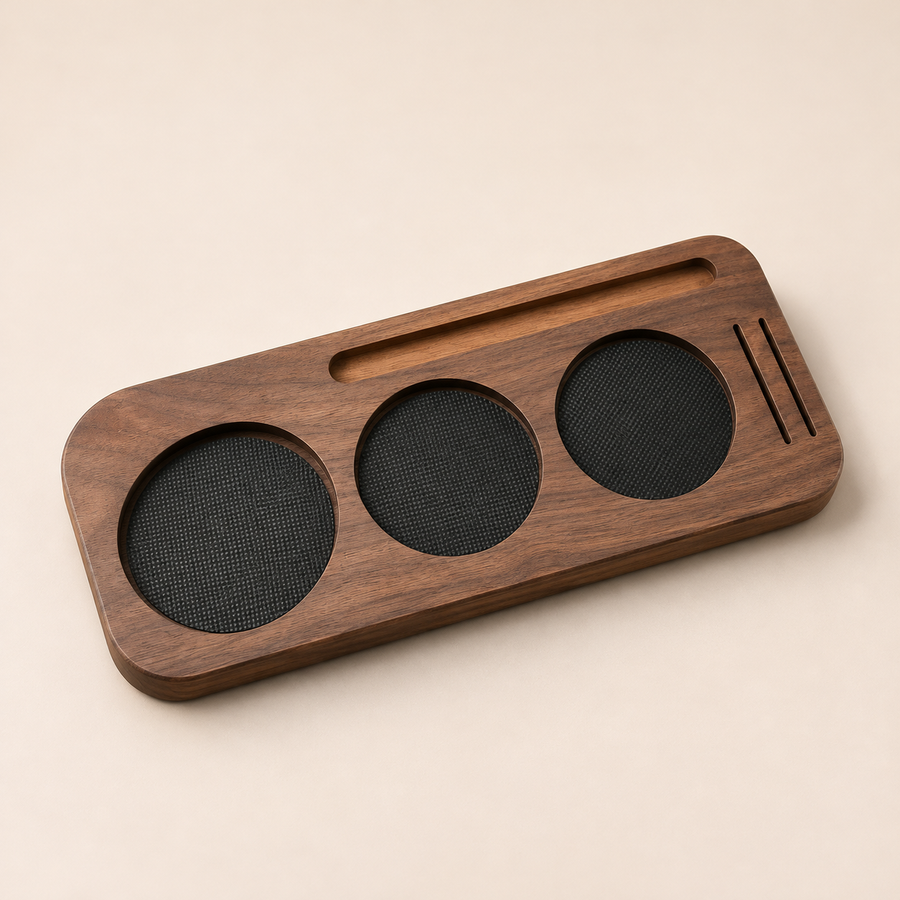
A small coffee station works best when the counter supports the whole routine: preparing coffee, brewing it, serving it and cleaning up. A beautiful row of tools is less useful if you have nowhere to set a hot server or place a wet filter after brewing.
Before buying storage, make your normal coffee and notice which objects move where. That simple observation will tell you more about the layout you need than a photograph of someone else's much larger kitchen.
Map one ordinary coffee
- List the equipment you use in a single session, including the kettle, scale, cup, cloth and grounds container.
- Measure the working space and the vertical clearance beneath shelves or cabinets.
- Leave room to lift lids, add water, remove a portafilter and pour without stretching over other equipment.
- Identify a place for the wet parts after brewing, separate from dry tools and electrical connections.
- Keep storage only where it makes that sequence easier.
A station should suit the person using it. If you brew from the right-hand side or need to lift the water tank straight upward, allow for that movement. Dimensions on a product listing describe the object; the space needed to operate it can be larger.
Use three small zones
Dry preparation: keep beans, the grinder, dosing tools and a brush where water is unlikely to splash. Leave a firm, level place for the scale. A shelf that vibrates or makes a container touch the wall can interfere with a useful weighing routine.
Brewing and serving: give the brewer and receiving vessel a stable base. Plan where the hot dripper or kettle will go after use. Do not put an organizer in the one clear space where you need to pour safely.
Cleanup and drying: provide a route to the sink, a suitable place for used grounds and room for permitted washable parts to dry. Do not treat a wood organizer as a drying rack unless its maker has specifically designed it for that purpose.
Choose a layout for your brewing method
| Routine | Keep close | Leave clear |
|---|---|---|
| Pour-over | Scale, filter supply and receiving server | Pouring space and a resting place for the brewer |
| Espresso | Dosing tools, basket preparation area and knock box | Machine controls, portafilter movement and water-tank access |
| French press | Measured coffee, timer and serving cups | Stable plunging space and a route for cleanup |
If two people share the counter, make the route understandable to both. Store frequently used items in obvious locations, and agree where wet parts belong. A small tray for temporary items can help, but it should not become a permanent pile of old filters and loose grounds.
Buy storage after checking the tools
The Solid Wood Espresso Tool Organizer Base has size and wood options. Compare its openings with your tools rather than choosing solely by finish. The diameter of a tamper base, the shape of a handle and the way a tool sits in a slot all affect whether storage is useful.
A compact knock box can keep spent pucks in one place, but it still needs space to be used and emptied comfortably. Keep it where a portafilter can reach it without passing over fragile cups or a charged electronic device.
Spend on the bottleneck
If you cannot repeat the recipe, a measuring method may help more than a display shelf. If you spill grounds during preparation, investigate the transfer or containment step. If cleanup is the reason you stop brewing, fix the waste and drying area before adding another brewer.
Use the cup-versus-funnel comparison to identify a specific handling problem. The cleaning routine helps decide what needs a dry home and what needs drying space.
The one-week layout check
Try the arrangement for a week before buying more. Notice what you constantly move out of the way, what you never reach for and whether anything sits damp after cleanup. Keep the items that improve your routine; move occasional tools into another cupboard.
A successful small station is easy to reset and pleasant to use the next morning. It does not need to look full, and it does not need to contain every accessory sold for your brewing method.


