
THEODORE / COFFEE GUIDES

Coffee Server Size Guide: Match Your Brew, Dripper and Counter

Choose a server by brew volume, dripper fit and handling needs, with room for a practical everyday routine.

Coffee Server Size Guide: Match Your Brew, Dripper and Counter

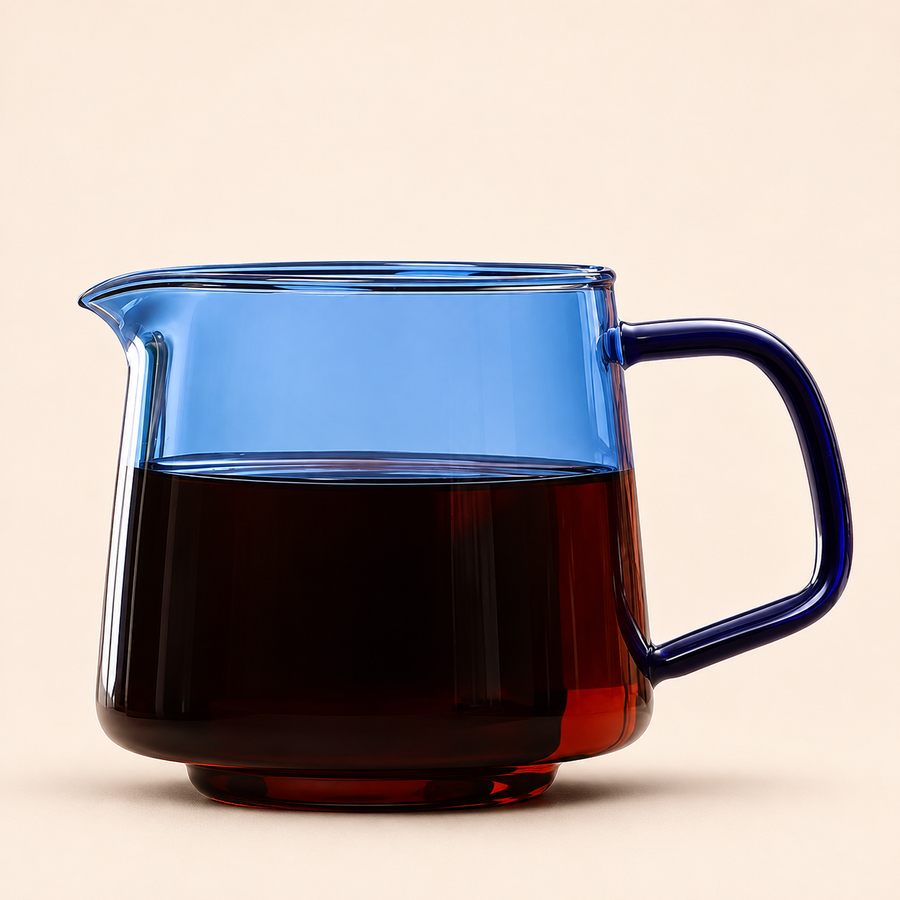
A coffee server is easy to overlook until the dripper rocks on top, the batch is too large or the handle feels awkward in a crowded brewing corner. Choose it as part of a setup: the brewer, server, scale and cup should work together. An attractive photo is a starting point, not a measurement.

Start with the batch you normally make

Write down the amount of water in your usual recipe and the finished beverage you expect to serve. Grounds retain some water, so input water and beverage output are different quantities. The server should comfortably contain the finished brew while allowing safe handling; do not treat a brim-full nominal capacity as an everyday working fill line.

If you usually make one cup but occasionally brew for two, compare both routines before buying a larger server. A large vessel also takes more counter and storage space. Check the actual capacity and dimensions of the selected variant instead of assuming the largest photo represents every option.

Check the opening and dripper base together

The server opening needs to support your dripper securely. Compare the opening diameter, the dripper’s supporting base and the manufacturer’s fit instructions. A dripper that happens to rest on an edge may still be unstable. Check whether the lid must be removed during brewing and whether a separate stand is required.

If you use a folding dripper stand, also measure its clearance with the server underneath. Account for the handle and any lid or knob. Never balance a brewer on a makeshift support to compensate for an incompatible opening.

Make the scale part of the fit check

Measure your scale’s usable platform and check its maximum load. That load may include the server, dripper, coffee and water together. Leave the display and controls accessible. A server can fit the counter while still hiding a small scale’s screen or overhanging its platform.

Our coffee scale guide explains tare and everyday checks. Keep electronic scales dry and follow their own heat and moisture instructions; a heat-resistant server does not make the scale beneath it heat-proof.

Read the care and heat guidance

Glass appearance does not establish stovetop, microwave or dishwasher suitability. Only use heating and cleaning methods explicitly permitted for the exact product. Avoid sudden temperature changes unless its instructions allow them, and stop using chipped or cracked glass. Inspect the handle and spout during normal washing.

Before you order

  • Compare capacity with your normal finished batch.
  • Confirm opening diameter and dripper support.
  • Measure height, handle clearance and scale platform.
  • Check whether the listing includes a lid, brewer or server only.
  • Read the exact care instructions.

Explore our glass pour-over coffee server and compare the variant details with your existing brewer. For a complete routine, use our pour-over walkthrough. Questions about measurements? Contact admin@theodore.coffee before ordering.

Related Articles

Coffee Accessory Gift Guide: Choose by Their Brewing Routine
0 comment

Coffee Accessory Gift Guide: Choose by Their Br...

Choose a useful gift by starting with how they brew,...
Read more
Do You Need an Espresso Knock Box? Size, Placement and Cleanup
0 comment

Do You Need an Espresso Knock Box? Size, Placem...

A knock box can make grounds disposal more convenient. Check...
Read more
Which Coffee Cleaning Brush Do You Need? A Task-by-Task Guide
0 comment

Which Coffee Cleaning Brush Do You Need? A Task...

Match the brush to the task and your equipment’s instructions,...
Read more
Coffee Server Size Guide: Match Your Brew, Dripper and Counter
0 comment

Coffee Server Size Guide: Match Your Brew, Drip...

Choose a server by brew volume, dripper fit and handling...
Read more
Choosing Coffee Filters: Shape, Size and a Care Routine You Can Keep
0 comment

Choosing Coffee Filters: Shape, Size and a Care...

A filter has to fit your brewer and your routine....
Read more
Moka Pot Buying Guide: Size, Stove Compatibility and Daily Care
0 comment

Moka Pot Buying Guide: Size, Stove Compatibilit...

Check serving size, stove compatibility and the care routine before...
Read more
Choosing a Milk Frothing Pitcher: Capacity, Clearance and Control
0 comment

Choosing a Milk Frothing Pitcher: Capacity, Cle...

The right pitcher leaves space for expansion and fits beneath...
Read more
How to Use a Coffee Scale: Tare, Timing and Everyday Checks
0 comment

How to Use a Coffee Scale: Tare, Timing and Eve...

A scale makes a recipe easier to repeat when you...
Read more
Espresso Dosing Cup vs Funnel: Which Solves Your Mess?
0 comment

Espresso Dosing Cup vs Funnel: Which Solves You...

A cup carries grounds; a funnel contains them at the...
Read more
51 mm, 53 mm or 58 mm? How to Choose an Espresso Tamper Size
0 comment

51 mm, 53 mm or 58 mm? How to Choose an Espress...

A familiar machine name is not enough. Check the basket...
Read more
How to Use a WDT Tool Without Overcomplicating Espresso
0 comment

How to Use a WDT Tool Without Overcomplicating ...

WDT works on the loose coffee bed before tamping. Build...
Read more
Glass French press coffee maker with a black handle and frame
0 comment

French Press Coffee: Ratio, Capacity and a Bett...

Measure the coffee, leave room for the grounds and learn...
Read more
Coffee-to-Water Ratio: A Practical Guide for Home Brewers
0 comment

Coffee-to-Water Ratio: A Practical Guide for Ho...

A ratio is a starting point, not a rule. Learn...
Read more
How to Make Pour-Over Coffee: A Calm, Repeatable Routine
0 comment

How to Make Pour-Over Coffee: A Calm, Repeatabl...

Set up a stable brewer, measure the water and learn...
Read more
How to Build a Small Coffee Station Around Your Daily Routine
0 comment

How to Build a Small Coffee Station Around Your...

Start with the space a brew needs, not the number...
Read more
A Coffee Tool Cleaning Routine You Can Actually Keep
0 comment

A Coffee Tool Cleaning Routine You Can Actually...

Separate dry grounds from wet cleanup, match the method to...
Read more