
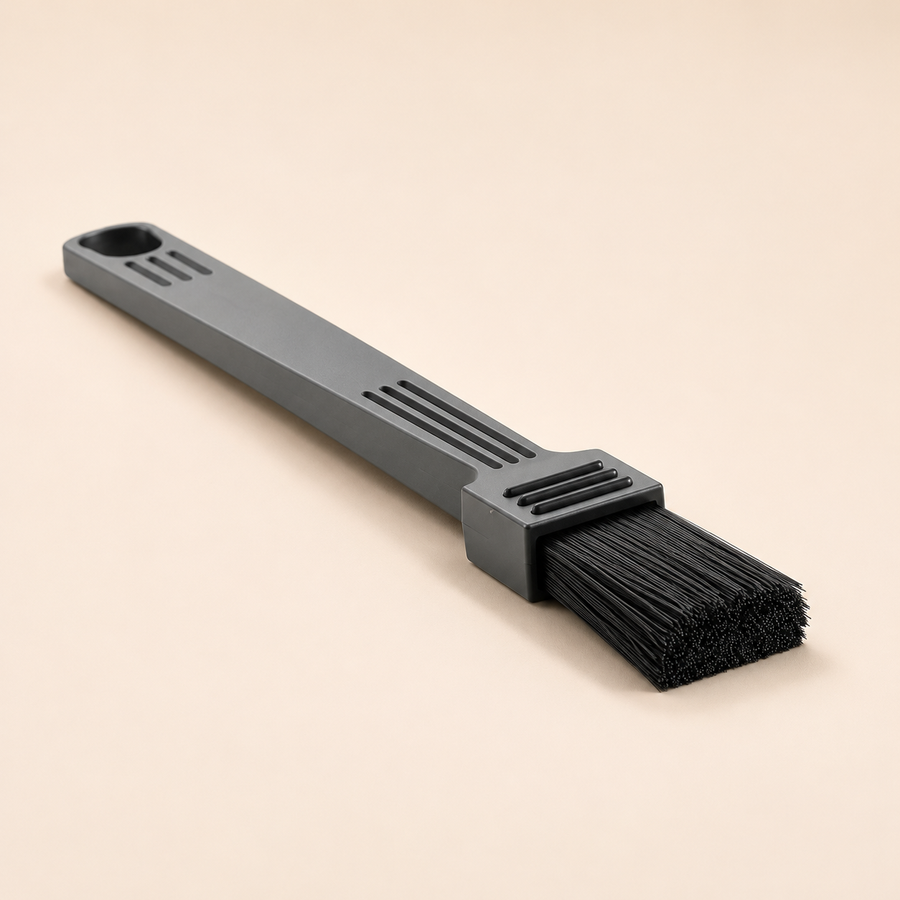
A useful coffee cleaning routine starts by separating two jobs: removing dry grounds and washing parts that are designed to get wet. A grinder's burr chamber, a rechargeable scale and a glass server should not all receive the same cleaning treatment.
Use the instructions for the exact equipment you own. Material, coatings, seals, electrical parts and removable components change what is appropriate. A general guide can help organize the work; it cannot establish a dishwasher or soaking allowance that the manufacturer has not provided.
After each brewing session
- Dispose of used grounds appropriately and clear loose dry coffee from the preparation area.
- Let hot equipment cool enough for safe handling before dismantling it.
- Clean washable food-contact parts using their specified method, including any filter screens or seals that require attention.
- Wipe the work area and allow parts to dry as directed before storage.
- Put each tool back where you can notice whether it is clean and ready.
A quick reset is more likely to happen if the brush, grounds bin and drying space are easy to reach. Avoid putting a wet tool into a closed organizer simply to make the counter look tidy. Storage should not hide the work that still needs doing.
Give brushes separate jobs
Use a dry brush for loose coffee in areas where the equipment manual permits brushing. Keep a brush intended for wet espresso-machine cleaning separate from one used around a dry grinder. Check the head and handle for trapped residue and clean them according to the brush's own care guidance.
The Coffee Grinder Cleaning Brush and Angled Espresso Machine Cleaning Brush serve different handling needs. Neither replaces an approved cleaning chemical, a machine cleaning cycle or a part-specific tool when the manual calls for one.
Grinder care needs its own instructions
Before reaching inside an electric grinder, disconnect power and follow the maker's disassembly procedure. Do not assume removable burrs, the motor area and the bean hopper are all washable. Reassembly and the permitted cleaning method vary by model.
Baratza's cleaning guide, for example, distinguishes brushing the burr chamber and chute from washing its removable hopper and grounds bin. It also identifies coffee oils and small particles as sources of buildup. Apply that general distinction thoughtfully; the actual removal steps for a Baratza grinder are not instructions for an unrelated manual grinder.
Choose the method by material and construction
| Item | Check before cleaning | Avoid assuming |
|---|---|---|
| Glass server or French press | Thermal-shock precautions and removable-part instructions | All glass can move directly from very hot to cold water |
| Wood organizer or brush handle | Finish and moisture-care guidance | Wood can be soaked like a stainless utensil |
| Scale or electronic timer | Water protection and approved wiping method | A kitchen device is waterproof |
| Reusable filter | Material, screen construction and storage directions | Nylon, cloth and metal all need the same treatment |
A short weekly inspection
Look for residues around basket edges, seams and the underside of accessible parts. Inspect filter screens for damage and brushes for loose or worn bristles. Empty and clean the knock box according to its instructions. Check whether the drying area is genuinely dry before returning wooden or electronic items to it.
Pick a schedule based on use and the maker's recommendations. A household brewing one coffee each morning has a different workload from a machine used throughout the day. A calendar reminder is useful, but visible residue or a blocked component should not wait for an arbitrary weekly date.
Make the routine smaller, not more elaborate
If cleanup feels too big, list the parts that touch grounds, coffee or milk in one normal session. Keep the necessary supplies nearby and remove tools you do not actually use. A well-organized coffee station can reduce the number of times you cross the kitchen with wet equipment.
For press assembly and serving, see the French press guide. Keep the equipment manual available for deep cleaning, descaling, backflushing and repairs; those are different tasks with different requirements.
Further reading: Baratza: grinder cleaning essentials.


