
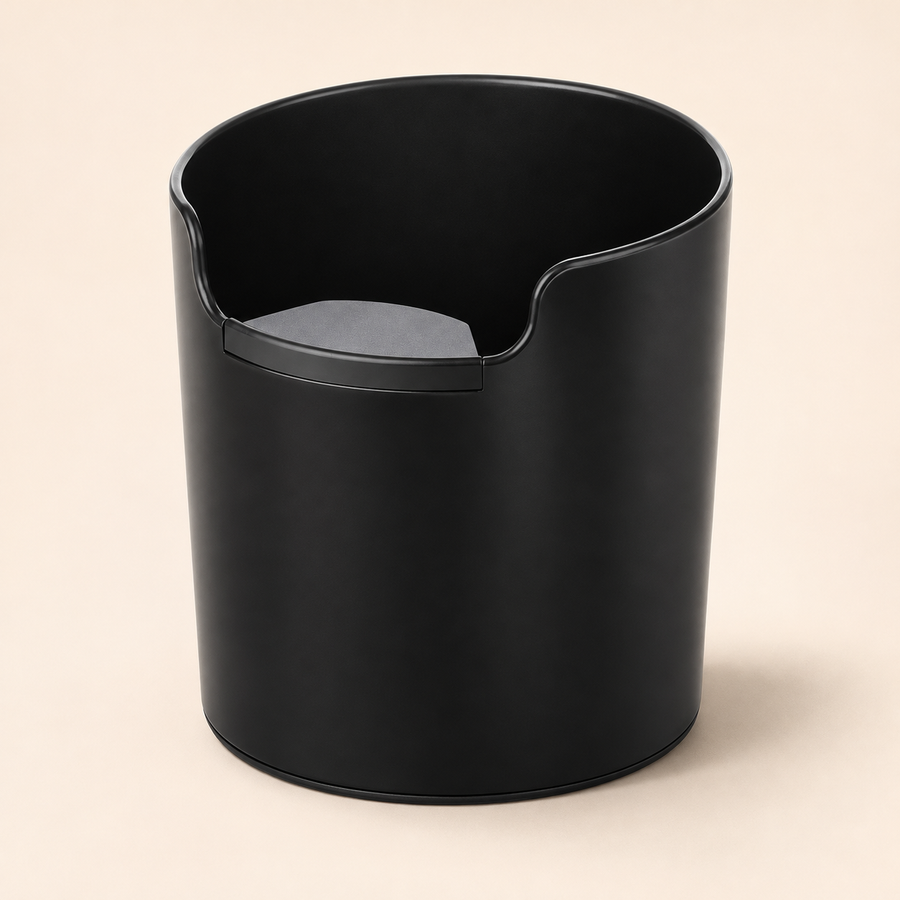
A knock box gives spent espresso grounds a dedicated place to go between brews. It can help contain a messy part of the routine, but it is useful only if it fits your workspace and is easy to empty. Treat it as a convenience tool rather than a promise of better espresso.
Decide whether it solves a daily problem
If you make several espresso drinks in a session, walking to a bin after every shot may interrupt your workflow. A nearby knock box can collect pucks until you finish. If you make an occasional coffee and already have a suitable disposal routine, another container may add more cleaning than convenience.
Think about who uses the station and how often you can empty it. A larger box is not an invitation to leave damp grounds sitting indefinitely. Choose a capacity that matches your cleaning habits and space, not just the maximum number of pucks advertised.
Check the portafilter and bar clearance
Compare your portafilter with the box opening and knock bar. There needs to be enough room for controlled use without striking the rim or catching the handle. Basket diameter alone is not the whole fit check: the body, spouts and handle shape matter too. Read your portafilter maker’s handling guidance.
Do not use force to compensate for poor fit. A purpose-built knock box should be used as its maker directs, on a suitable stable surface. Never strike a portafilter against glass, a sink edge or an improvised fragile container.
Measure the place where it will live
Check width, depth and height, then allow room for your hand and portafilter above the bar. A container that fits under a cupboard may still be awkward to use there. Keep it clear of electrical controls and choose a position where scattered grounds can be wiped away easily.
If you use an organizer, confirm that the listing actually includes a knock box rather than only a holder or cutout. Photos may show styling accessories that are sold separately. Our coffee station guide can help you plan the footprint before purchasing.
Look at the emptying and washing routine
Check whether the bar is removable and what cleaning methods are permitted. Do not assume a rubber-like coating, metal container or wooden surround is dishwasher-safe. Inspect the bar and base for wear, and replace damaged parts according to the maker’s guidance.
Dispose of spent grounds according to local waste rules and keep them out of drains where they can contribute to blockages. Empty and clean the container regularly, then dry it as directed. A compact, easy-to-clean box may be more practical than a large one with inaccessible corners.
Before checkout
- Measure the intended counter space and working clearance.
- Compare the opening with your complete portafilter.
- Check included parts, materials and care instructions.
- Choose a realistic emptying routine.
Browse espresso accessories at Theodore Coffee, and pair the tool with our daily cleaning routine. For dimension questions, contact admin@theodore.coffee before ordering.


